

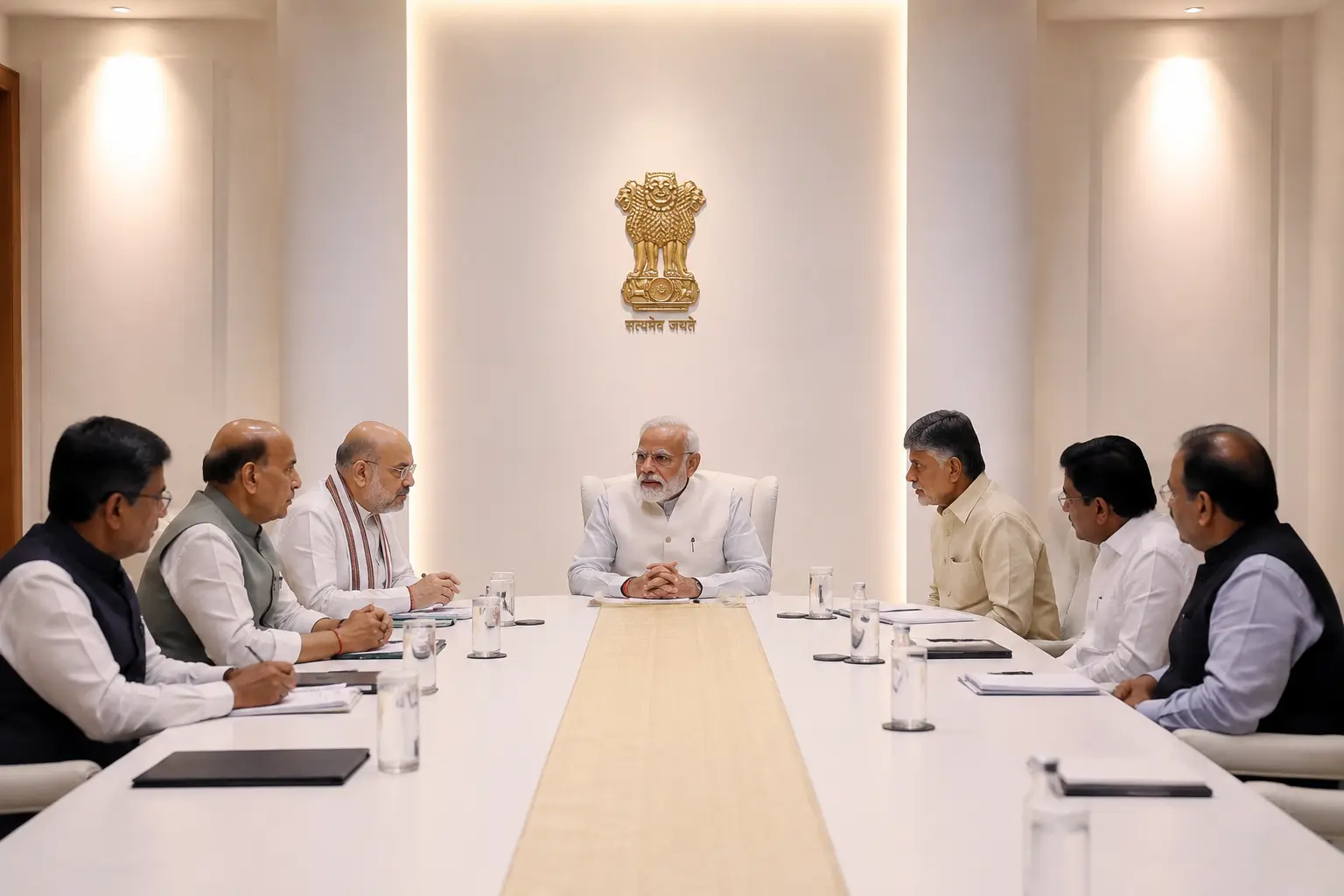
Why Leadership Decides the Future of a Nation
A nation cannot grow beyond its leadership.
Every country reflects the thinking, priorities, and vision of the people leading it. Roads, institutions, education systems, economies, cities, public behavior, and even national confidence are shaped over time by leadership decisions.
Most people believe countries change mainly through public support from the ground level. Public participation is important, but history repeatedly shows that long term national transformation usually begins from the top through capable leadership, strong institutions, and clear direction.
Leadership determines what a country focuses on. It decides whether a nation prepares for the future or continues reacting to problems only after they become crises.
A government without long term thinking may still survive politically, but the country slowly begins to lose direction. Policies become temporary. Projects remain incomplete. Systems become inefficient. Citizens lose trust. Over time, national energy gets consumed by short term politics instead of long term development.
This is why leadership matters far more than most people realize.
Leadership Affects Everyday Life More Than People Realize
Many people think leadership only matters during elections or political debates. But leadership decisions quietly affect everyday life in ways most citizens do not immediately notice.
The quality of roads people travel on, the pollution they breathe, the cost of housing, the condition of schools, traffic management, job opportunities, water supply, healthcare systems, public safety, and even how stressful daily life feels are all influenced by long term leadership decisions.
When leadership plans well, citizens experience stability without constantly thinking about it. But when leadership lacks direction, ordinary people slowly begin carrying the burden through rising frustration, uncertainty, inefficiency, and declining trust in systems.
In many ways, the average citizen experiences the consequences of leadership every single day, even without directly noticing it.
Changing Faces Is Not Enough
Many people believe replacing one leader with another will automatically solve national problems. During every election cycle, people hope that a new face, a new party, or a new government will suddenly transform the country. But in many cases, the same problems continue for years or even decades despite political changes.
This happens because changing individuals alone rarely changes the deeper culture of governance. If the same political thinking continues through short term planning, reactive decision making, election focused governance, poor execution, and lack of accountability, then progress remains limited regardless of who holds office.
Policies may change temporarily. Speeches may sound different. Public narratives may shift. But the overall direction of the country often remains trapped in the same cycle.
The real issue is often not just leadership itself, but the mindset behind leadership. A country cannot move forward if leadership is constantly focused on immediate political survival instead of long term national development. When decisions are made only to win the next election, the future of the next generation slowly gets ignored.
Why Top Down Change Is So Powerful
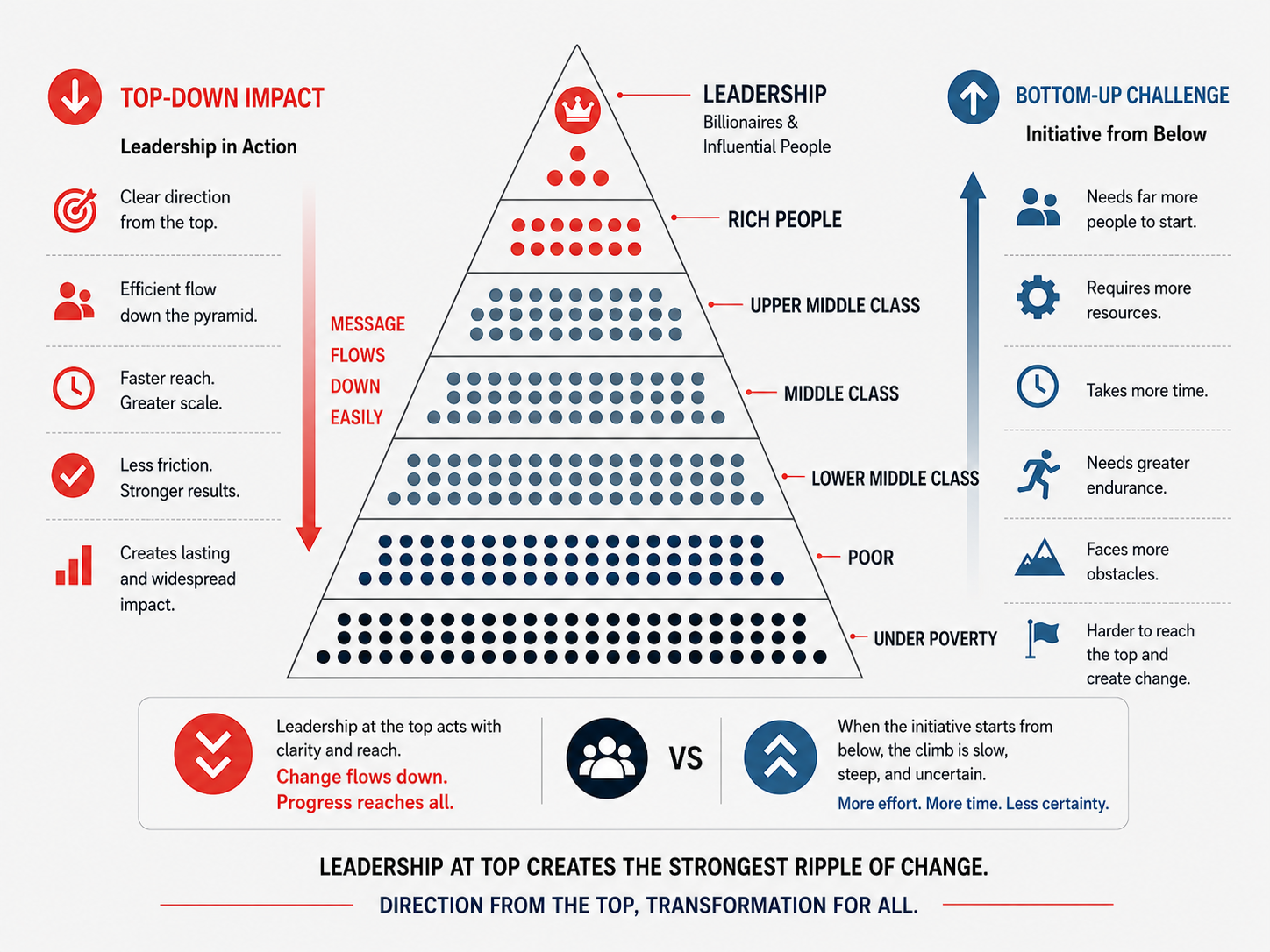
Large public movements can create awareness, pressure, and participation. But major national transformation usually happens when leadership uses state capacity effectively.
A capable leadership can reform institutions, improve infrastructure, modernize systems, strengthen education, redirect national priorities, encourage innovation, and create long term plans that shape the future of millions of people. One serious policy decision from the top can impact an entire country within years.
This is why leadership quality directly affects the speed and direction of national progress. Change from the top moves faster because leadership has the ability to organize resources, create systems, and push large scale execution in ways ordinary citizens cannot.
That does not make people unimportant. It simply shows why leadership carries enormous responsibility.
Leadership Creates National Culture
Over time, societies begin adapting to the systems around them.
If leadership rewards competence, discipline, honesty, responsibility, and long term thinking, those values slowly become stronger within society itself. Institutions become more stable. Public trust improves. People begin taking systems more seriously.
But when leadership normalizes corruption, division, emotional politics, and short term thinking, the damage spreads far beyond politics. It slowly affects institutions, public behavior, national unity, and social trust across the country.
Leadership does not only manage a nation. It shapes the culture of the nation.
Vision Separates Growing Nations From Struggling Nations
Many governments spend most of their time dealing with immediate issues like inflation, elections, headlines, and political conflicts. But serious leadership prepares for decades ahead.
It asks difficult questions. What will cities look like in 25 years? Will future generations have enough water? How will technology affect jobs? Can infrastructure support future populations? Is the education system preparing young people for the future or only for outdated systems?
Countries that think long term slowly build stability, confidence, and direction. Countries that only react remain trapped in permanent crisis management.
Great Nations Are Built Before They Are Seen
Strong countries are usually built quietly over long periods of disciplined planning, institution building, and consistent leadership. Most visible national success is often the result of decisions made years or even decades earlier. Modern infrastructure, stable economies, strong institutions, efficient cities, and public trust do not appear overnight. They are usually built slowly through patience, consistency, and long term direction.
Nations do not become developed accidentally. They become developed when leadership is willing to think beyond temporary politics and begin preparing for the future before problems become unavoidable. Real progress often begins long before people can visibly see the results.
Leadership Is More Than Speeches
True leadership is not measured only through slogans, popularity, branding, or public image. Real leadership is measured through clarity of direction, quality of decisions, strength of institutions, consistency, execution, and responsibility toward future generations.
A nation’s future depends heavily on whether its leadership has the discipline and vision to build beyond the present moment.
Elections may change governments. But only leadership with vision can truly change the future of a nation.
This is why leadership matters. If we truly want long term change for the country, we cannot remain satisfied only reacting from below. Real transformation requires capable leadership, clear direction, and the courage to take responsibility from the top. This is what HADISO is trying to build.
This is why leadership matters. If we truly want long term change for the country, we cannot remain satisfied only reacting from below. Real transformation requires capable leadership, clear direction, and the courage to take responsibility from the top. This is what HADISO is trying to build.
Constructive and respectful discussion is encouraged.

